This guide is written for the people actually doing the work: the volunteer coordinators, PTO parents, church event leads, nonprofit staff members, and community organizers who are managing shirt orders on top of everything else.
Whether you’re ordering fundraising shirts to sell to participants or bulk shirts for your volunteers and staff, here’s what you need to know to get it right without all the stress.
The Two Types of Shirts Most Walk Events Need
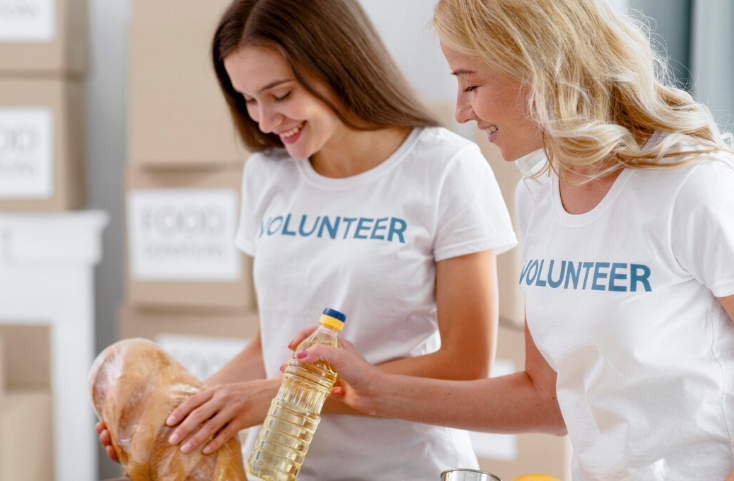
Before you start shopping for a printer, it helps to get clear on what you’re actually ordering because the two main types of shirts for charity walks have very different requirements.
Fundraising Shirts (Sold to Participants)
These are the shirts participants purchase as part of registration, donation incentive, or an add-on. They’re a common way to raise money and build community identity around your event.
What makes them different:
- You typically pre-sell them or collect sizes in advance
- They’re part of your fundraising math (cost per shirt matters)
- Design and color often carry symbolic weight (your cause, your team, your year)
- You may not know final quantities until close to your print deadline
What to watch out for:
- Ordering too many leaves you with inventory and sunk cost
- Ordering too few means turning people away (or scrambling for a reorder)
- Printing too early locks you into quantities before registration closes
The smart move is to collect size data during registration and place your order once numbers stabilize, leaving enough buffer to hit your printer’s deadline. Most event-grade printers can turn around an order 5-10 business days, but if you are cutting it close, look for rush options.
Volunteer, Staff, and Team Shirts (Bulk Operational Orders)
These are the shirts that your crew wears on event day. They serve a practical function: they make your team visible, organized, and easy for participants to identify. They also signal professionalism and help your volunteers feel like they’re part of something.
What makes them different:
- Quantities are usually fixed and known earlier
- Sizing tends to skew towards adults in a narrower range
- Speed and reliability matter more than price sensitivity
- You may want these in hand days before the event for distribution
This is also where most event organizers run into their biggest headaches. It is not because the shirts are complicated, but because the deadline is non-negotiable. If your event is on a Saturday, you can’t just push it, You need shirts that show up on time, every time.
Setting Your Timeline
One of the most common mistakes event organizers make is treating their shirt order as something they will eventually “get to” once other logistics are sorted.
By the time the venue is confirmed, the route is mapped, and the sponsors are finalized, you may be looking at a two-week window, and that’s not much leeway.
Here is a rough timeline framework to work backward from your event date:
- 8-10 Weeks Out: Finalize your design concept, colors, and garment styles. If you’re doing participant shirts, set a registration deadline for size collection.
- 6 Weeks Out: Submit your order or, at minimum, have your artwork ready to go. This gives you time for any design revisions and comfortable production window.
- 3-4 Weeks Out: This is still manageable for most standard orders, but you’re entering the territory where you’ll want to confirm the production timeline explicitly. Ask your printer for a guaranteed ship date,
- 2 Weeks or Less: You’re in rush territory. Not all printers can handle this, and those that can may charge you a premium. Know your options before you’re in this position.
If you’re ordering volunteer shirts separately from participant shirts, treat them as two independent orders with their own distinct timelines. Volunteer shirts often need to arrive earlier for pre-event team prep and distribution.
What to Look for in a Custom Apparel Printer
Not all custom shirt companies work the same way, and the differences matter a lot more when you have a fixed event date and a volunteer team counting on you.

In-House Production vs. Outsourcing
Some of the biggest names in custom apparel are essentially middlemen. They take your order, mark it up, and hand it off to a network of third-party vendors to actually produce.
That model creates variability, and when something goes wrong, you’re waiting on a chain of people to fix it. Companies that handle production in-house control the printing, quality checks, packing, and shipping from a single facility, which means faster fixes, more consistent results, and no finger-pointing between vendors.
Guaranteed Delivery Dates and Rush Options
Ask directly: Does this company guarantee a delivery date, or just estimate one? Some advertise fast turnaround but hedge everything with caveats.
For volunteer and staff shirts, especially, you want a printer that will commit to a specific date and stand behind it. Look for companies offering a range of rush tiers alongside standard production windows.
Quality and Customer Support
Even great printers make mistakes, but what matters is how quickly they catch and fix them.
A company with a rigorous internal quality process will catch most issues before they ship, and a customer service rep who can walk to the production floor and physically check your order is a very different experience than a call center reading from a ticket queue.
For community organizers managing this on the side, that kind of accessible support makes a real difference.
Pricing Transparency
Watch out for setup fees, artwork fees, per-color charges, and shipping costs that only appear at checkout. For nonprofits and volunteer-run events working with tight budgets, a surprise on the final invoice is genuinely disruptive.
Look for printers that are upfront about what’s included, offer free shipping, and have bulk pricing that scales reasonably for orders in the 50 to 300 shirt range, which covers most community walks.
Ordering Fundraising Shirts: Tips for Getting It Right
First, collect sizes before you order. Run a size pre-sale or include shirt size as part of registration. This gives you real data to order against rather than guessing.
Add a small buffer, but not too much. A 5-10% buffer above your confirmed orders gives you room to handle last-minute additions without dramatically overstocking. Going much higher eats into your fundraising margins.
Think about your design early. Your design affects print costs. More colors in a screen print design generally means higher cost per shirt. A clean, well-executed two or three-color design often looks better anyway. It also gives more room to price the shirt at a level that raises meaningful money for your organization.
Ask about sample options. For larger orders, some printers offer a printer sample before running the full job. That is something that is worth asking about, especially if your shirt is serving double duty as a fundraising item and a keepsake. Seeing the actual print before you commit gives you confidence that what participants receive matches what you promised.
Set a clear deadline for size changes. Once you submit your order, changes are difficult or impossible. Communicate a firm cutoff for registration-linked shirt orders and stick to it.
Ordering Volunteer and Staff Shirts: What Matters Most
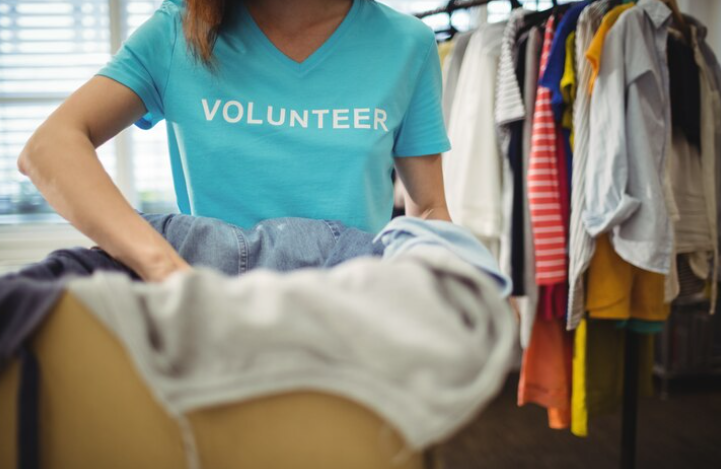
Lock in quantities early. Volunteer rosters have a way of fluctuating, but try to get a firm number at least three weeks before your event. If people are added later, a small surplus order is easier to manage than a last-minute reorder.
Choose a simple design. Volunteer shirts don’t need to be elaborate. Clear, readable, functional with your organization name, event name, maybe a year. The goal is visibility and cohesion, not complexity. Simpler designs are also faster to approve and less prone to print issues.
Ask for guaranteed delivery dates. This bears repeating. For volunteer shirts, you do not want “estimated to arrive by.” You need a date. If a printer can’t give you a guaranteed delivery date, that’s a signal to pay attention to.
Consider ordering a few days early for distribution. If you’re distributing shirts to volunteers ahead of event day in order to make pre-event team prep much smoother, factor that into your timeline. You want shirts in hand by Wednesday or Thursday before a Saturday event, definitely not Friday afternoon.
Have a backup plan for sizing. Order a few extra shirts in the most common sizes (usually M, L, XL). Volunteers who did not get measured or whose size changed will appreciate the flexibility, and it is much easier than scrambling for a last-minute addition.
Blue Cotton: A Bulk Printer Worth Knowing
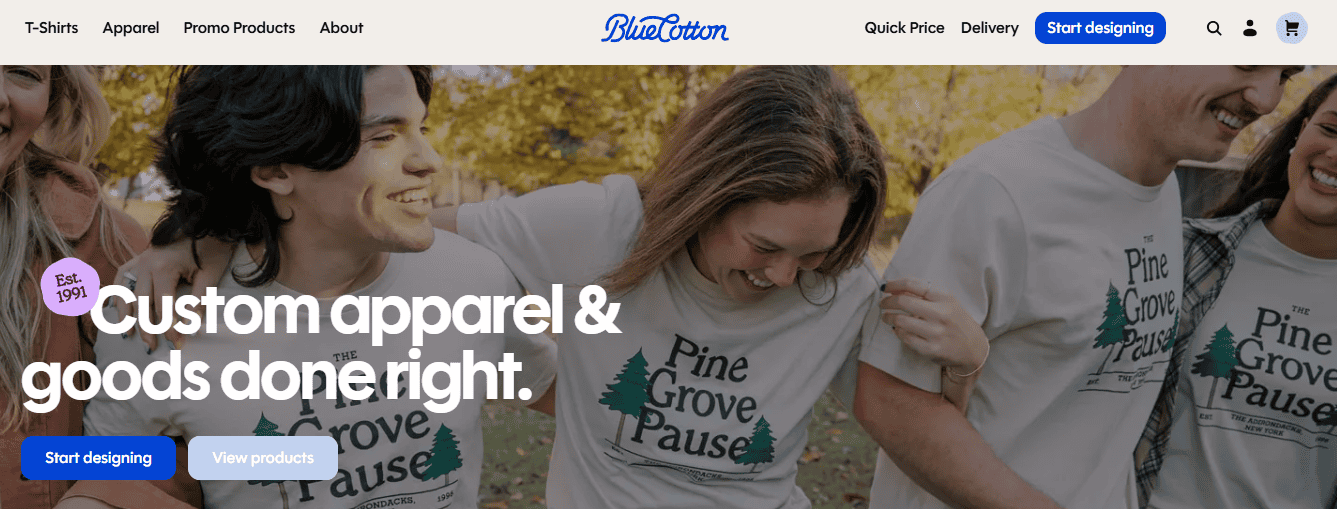
BlueCotton comes up a lot in conversations among people who’ve organized community events more than once. They’re based in Bowling Green, Kentucky, and do everything from a single facility, which means no outsourcing and no vendor handoffs. For a fixed-deadline order, that operational structure tends to reduce the number of things that can go wrong.
They offer guaranteed delivery dates rather than estimates, with rush tiers at one, three, and five days if you’re working with a tight window. Their customer service team works in the same building as production, so when you call with a question, you’re more likely to get an actual answer than a status update pulled from a screen. Whether that translates to a great experience every time is something you’d want to verify with a direct conversation before placing a large order.
Pricing is also generally straightforward. No middleman means no vendor markup baked in, and shipping to all 50 states is free. Orders start at six pieces, which makes them accessible for smaller teams, and they scale into the hundreds without much friction. As with any printer, it’s worth getting a full quote upfront so you know exactly what’s included before you commit.
Nonprofits, church groups, and community organizations are all groups that BlueCotton serves and so their pricing model might work in your favor!
All that being said, they’re not the right fit for every situation. If you need individual fulfillment for participants or on-demand printing, look elsewhere. But for bulk volunteer and staff shirts where the date is fixed and you need reliability over everything else, they’re a practical choice that experienced event organizers tend to come back to.
Pros
- Guaranteed delivery dates with multiple rush tiers
- Everything produced in-house with no outsourcing
- Nine-step quality inspection before every order ships
- Free shipping to all 50 states
- Low minimums starting at six pieces
- Customer service works in the same building as production
Cons
- The printed sample deposit for smaller orders requires a $100 upfront payment, though it’s credited back at checkout
- Better suited for bulk orders than individual or on-demand fulfillment
Final Checklist Before You Place Your Order
Ordering shirts for a charity walk isn’t complicated, but it does require getting organized early and choosing a printer that can hold up their end of the deal when it matters.
For participant fundraising shirts, collect sizes early and give yourself a comfortable production window. For volunteer and staff shirts, prioritize reliability, guaranteed delivery dates, and a printer with real human support.
Before you submit anything, run through this list:
- Design is finalized and approved by your team
- Sizes are confirmed from registrations or volunteer roster
- You’ve added a small buffer for last-minute additions
- You know your date and have calculated backward to your ship deadline
- You’ve asked for (and received) a guaranteed delivery date
- Shipping address is confirmed, including any specific delivery requirements
- You understand the return/reprint policy in case something arrives wrong
- Payment method is set up and approved by your organization
Shirts are a small piece of a much bigger event, but they show up in every photo, every thank you post, and every memory your participants take home. Getting them right is worth the extra planning time.
