Between the crib, changing table, sound machine, and a seemingly never-ending supply of diapers, there’s one nursery essential that’s easy to overlook: a humidifier. Dry indoor air, particularly during the colder months when your heating system is running regularly, can contribute to nasal congestion, dry skin, and irritated airways. And when your baby inevitably catches a cold, having a humidifier on hand can help provide some temporary relief from that stuffiness.
However, not all humidifiers are equally suited for a nursery. You’ll want to consider everything from mist temperature and noise levels to how easy the device is to clean and refill. Whether you’re preparing for your baby’s arrival or looking for something to help your little one feel more comfortable during cold and flu season, here are five of the best humidifiers for babies and nurseries.
At A Glance
| Humidifier | Best for | Tank Capacity | Maximum advertised runtime | Price |
| Vicks 3-in-1 SleepyTime Cool Mist Humidifier (VUL500) | Best overall | 0.6 gallon | 24 hours | $39.99 |
| Vicks Filter Free Ultrasonic Cool Mist Humidifier (VUL565) | Best for everyday use | 1.2 gallons | 30 hours | $49.99 |
| Levoit Classic 300S Smart Humidifier | Best smart humidifier | 6 liters | 60 hours | $79.99 |
| Pure Enrichment MistAire Ultrasonic Cool Mist Humidifier | Best compact humidifier | 1.5 liters | 25 hours | $39.99 |
| Honeywell HEV320B Cool Moisture Humidifier | Best evaporative humidifier | 1 gallon | 24 hours | $68.95 |
How to Choose the Best Humidifier for Your Baby’s Nursery
There are a few things worth considering when shopping for a nursery humidifier, like how the device will fit into your baby’s environment and your family’s daily routine.
- Mist temperature: Prioritize cool-mist humidifiers over warm-mist models for babies and young children. Cool-mist humidifiers provide moisture without the risk of burns associated with heated water or steam, making them a safer option for a nursery.
- Room size and tank capacity: Choose a humidifier designed for the approximate size of your baby’s room. A large-capacity humidifier isn’t necessarily better for a small nursery, particularly if it releases more moisture than the space needs. Consider tank capacity alongside adjustable output settings and the device’s overall footprint.
- Ease of cleaning: Humidifiers need frequent cleaning to prevent the buildup of bacteria, mold, and mineral deposits. Look for models with wide tank openings, accessible interior surfaces, and removable components. Even a humidifier with great features may not be the best choice if it’s difficult to maintain regularly.
- Noise levels: Ultrasonic humidifiers tend to operate more quietly than evaporative models, which rely on fans. If your baby is sensitive to sound, you probably want to choose a model specifically designed to be quiet. However, some families might even find the consistent background noise of an evaporative humidifier meditative, like white noise.
- Humidity controls: Adjustable mist settings allow you to customize moisture output based on the room’s conditions. More advanced models may include built-in humidity sensors and automatic adjustment. If your humidifier doesn’t have these features, an inexpensive standalone hygrometer can help you monitor humidity levels.
- Safety features: Look for automatic shutoff when the tank is empty, a stable base, and a design that can be positioned securely away from your child’s reach. Optional features you might like are nightlights that are easy to turn off if your baby sleeps best in a dark room.
- Ongoing maintenance costs: Some humidifiers require replacement filters or other accessories, while ultrasonic models may require regular purchases of distilled water. Consider these expenses alongside the initial purchase price, especially if you plan to use it throughout the year.
Best Overall: Vicks 3-in-1 SleepyTime Cool Mist Humidifier VUL500
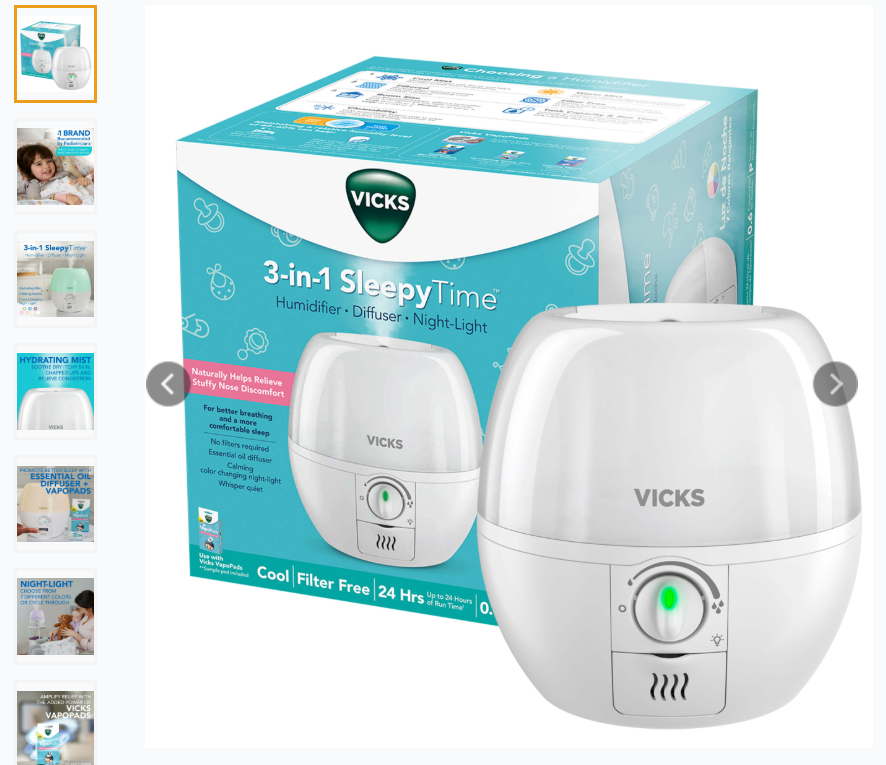
Truly designed with children’s bedrooms in mind, the Vicks 3-in-1 SleepyTime Cool Mist Humidifier combines several nursery-friendly features. It uses ultrasonic technology to release a fine, cool mist, and the 0.6-gallon water tank provides up to 24 hours of use on the lowest setting, which makes this the most practical option for overnight use in smaller rooms.
One of the more interesting features is the built-in night-light, which has seven colors to choose from. You can cycle through all of the colors, pick just one to display, or leave the light off entirely. The humidifier also features adjustable mist control and automatically shuts off when the water tank is empty, which is a nice safety feature to have in a nursery.
The device doubles as an essential oil diffuser and is compatible with certain Vicks VapoPads, but these features are completely optional. For babies, plain distilled water is the preferred starting point, and you should consult their pediatrician before introducing scented products into the nursery.
Pros
- Compact, perfect for small nurseries
- Quiet
- Adjustable mist
- Optional nightlight with seven colors
- Filter-free design
Cons
- Frequent refills
- Lacks more advanced features
Best for Everyday Use: Vicks Filter Free Ultrasonic Cool Mist Humidifier VUL565
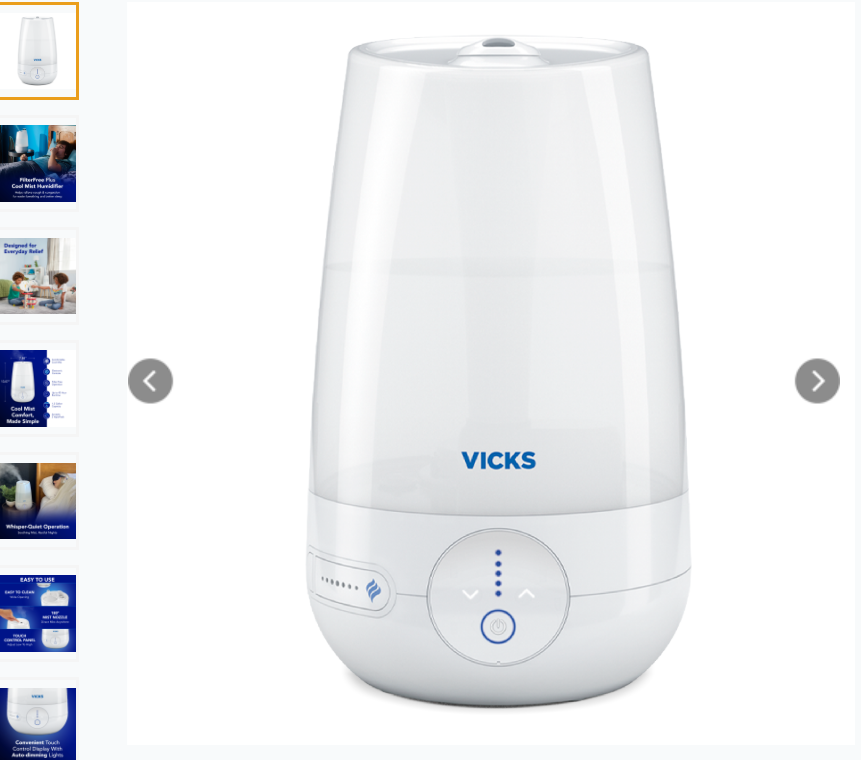
If you’re looking for a straightforward humidifier that can work well beyond the baby years, the Vicks Filter Free Ultrasonic Cool Mist Humidifier is a versatile option. Its 1.2-gallon tank is designed for medium-sized rooms and provides up to 30 hours of running time per fill, but this depends on the mist setting.
Like the SleepyTime, it uses ultrasonic technology to produce a visible cool mist and doesn’t require replacement wick filters. An adjustable mist control allows you to increase or decrease moisture output depending on the room’s humidity level. The water tank also has a wide opening, which makes accessing its interior for cleaning and refilling easier than many other tanks.
Other features are a relatively quiet operation, automatic shutoff when the tank is empty, and compatibility with Vicks Vapopads.
Pros
- Larger tank
- Simple controls
- Not geared just for babies
Cons
- Larger size takes up more space
- Doesn’t adjust output based on humidity levels
Best Smart Humidifier: Levoit Classic 300S Smart Humidifier
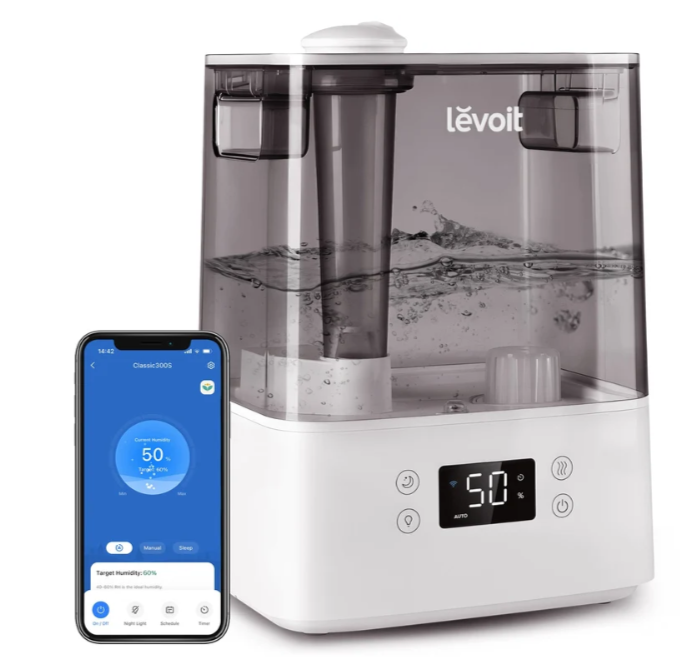
For parents who appreciate the convenience of controlling nursery devices from their phones, this smart humidifier is worth considering thanks to several useful features. The Levoit Classic 300S has a generous six-liter water tank and delivers up to a whopping 60 hours of operation on its lowest setting. Its larger capacity makes it suitable for spacious nurseries, shared bedrooms, and other areas of the home.
What sets this one apart is that it has a built-in humidity sensor and automatic mode. Rather than manually adjusting the mist throughout the day, you can select a target humidity level and allow the humidifier to adjust its output automatically. The device also connects to the VeSync app, which allows you to monitor humidity, adjust settings remotely, and create operating schedules.
Pros
- Top-fill design for easy refilling
- Optional nightlight
- Large capacity for bigger rooms
- Long run time
- Automatic humidity adjustment
Cons
- More expensive than basic humidifiers
- Takes up a lot of space
Best Compact Humidifier: Pure Enrichment MistAir Ultrasonic Cool Mist Humidifier
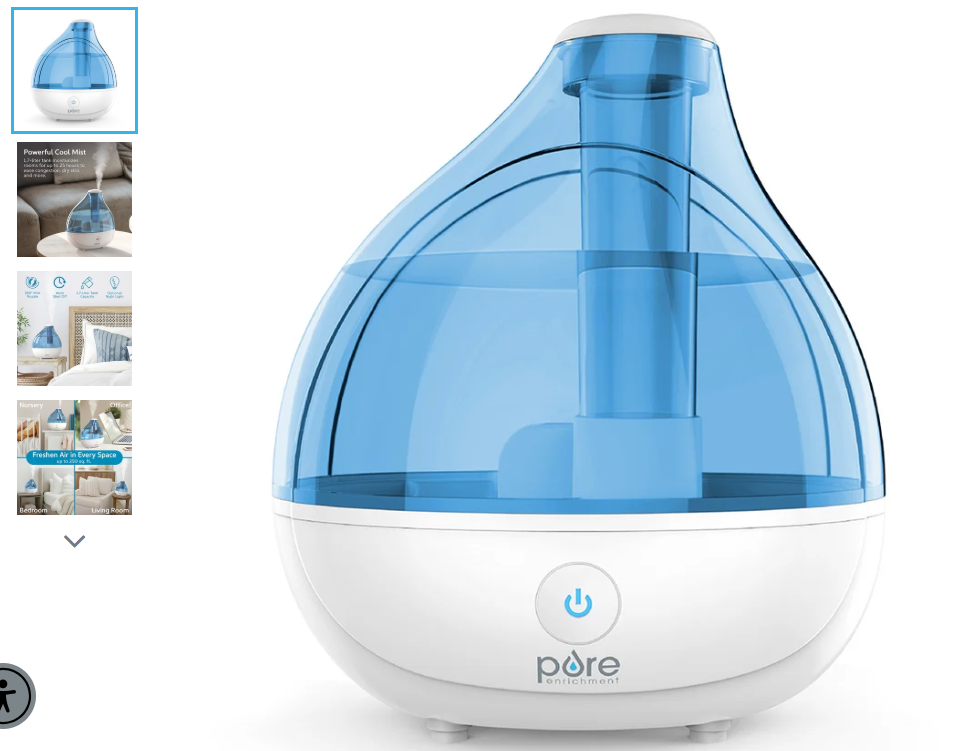
Not every nursery has room for a large humidifier, especially when you’re already trying to find space for a crib, dresser, diaper pail, and rocking chair. The Pure Enrichment MistAir Ultrasonic Cool Mist Humidifier is pretty compact and doesn’t sacrifice the essential features most parents need. The 1.5-liter water tank provides up to 25 hours of operation and is designed to humidify rooms measuring up to 250 square feet.
The humidifier features high and low mist settings, a rotating mist nozzle, an optional nightlight, and automatic shutoff when the water runs out. Its simple controls make it a practical option for parents who prefer to avoid complicated settings or app-connected devices.
Pros
- Perfect for small spaces
- Adjustable nozzle to direct mist
- Simple design
Cons
- Requires frequent refilling
- Shape of tank makes cleaning challenging
Best Evaporative Humidifier: Honeywell HEV320B Cool Moisture Humidifier
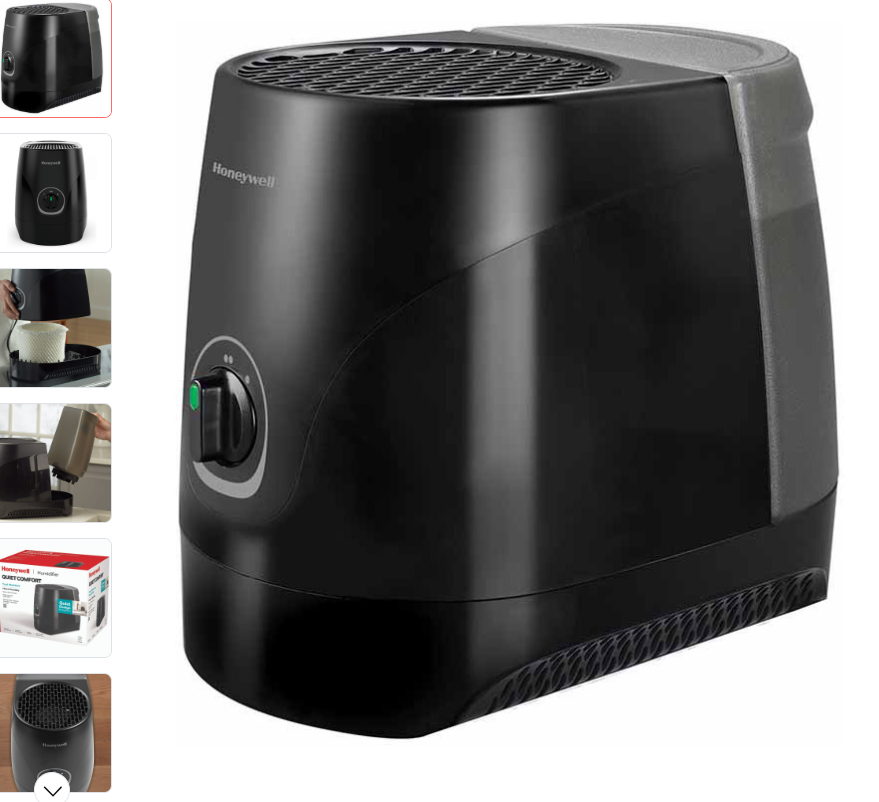
Most of the humidifiers mentioned use ultrasonic technology, but evaporative humidifiers offer another way to introduce moisture into your baby’s room. The Honeywell HCM350 uses a fan to move air through a saturated wicking filter, releasing moisture through evaporation rather than creating a visible mist.
The one-gallon tank provides up to 24 hours of runtime and is designed for medium-sized rooms. It also features three output settings, a wide tank opening, and UV technology designed to reduce certain microorganisms in the water before it passes through the wicking system. The filter also helps limit the release of minerals commonly associated with the white dust produced by ultrasonic humidifiers when they’re used with mineral-rich water.
Pros
- Evaporative design releases fewer minerals into the air
- Wide tank opening makes it easy to clean
- UV technology
Cons
- Louder than ultrasonic humidifiers
- Will need to purchase replacement wicking filters
How to Use a Humidifier Safely in a Baby’s Room
Choosing the right humidifier is important, but there are also some safety considerations once you actually start using it.
- Monitor the room’s humidity: Aim for a relative humidity level between 30% and 50%. Too much moisture can encourage mold growth and dust mites, which can potentially worsen respiratory symptoms.
- Use distilled water: Distilled water contains fewer minerals than most tap water, helping reduce mineral buildup and airborne white dust, especially in ultrasonic humidifiers.
- Change the water daily: Empty any remaining water, dry the accessible surfaces, and refill the tank with fresh water each day.
- Clean the humidifier regularly: The Environmental Protection Agency recommends cleaning portable humidifiers every three days. Follow the manufacturer’s specific cleaning and disinfection instructions, and rinse away any cleaning products thoroughly.
- Choose a safe location: Place the humidifier on a stable, level, water-resistant surface several feet from your baby’s crib. Keep the device and its power cord completely out of reach.
- Avoid directing mist at your baby: Position the mist away from the crib, bedding, walls, and nearby furniture to prevent surfaces from becoming damp.
- Avoid unnecessary additives: Don’t put essential oils, medications, or other substances in the water tank. Consult your pediatrician before using any scented accessories, even if the humidifier is designed to accommodate them.
If you notice any condensation on the windows, damp furniture, or moisture accumulating around the humidifier, reduce the mist setting or turn the device off until humidity levels return to an appropriate range.
Creating a More Comfortable Nursery for Your Baby
The best humidifier for your baby’s nursery doesn’t necessarily need to have the largest water tank, the longest runtime, or the most advanced features. Instead, look for a cool-mist humidifier that suits the size of your child’s room, is easy to maintain, and allows you to control moisture output. Whichever humidifier you choose, using fresh water, maintaining appropriate humidity levels, and keeping up with regular cleaning will help you get the most out of your purchase while creating a more comfortable environment for your little one.
