A golf belt can fit perfectly well while you are standing around the clubhouse, but become annoying once you start swinging. You’re experiencing enough rotation through the hips and torso that anything pinching at the waist or digging in near the buckle is going to get old over 18 holes.
Before deciding a belt fits, take a few practice swings, sit down, and bend like you are picking up a ball. If the waistband tightens when you rotate, or the buckle starts digging in, you are probably going to notice it even more after a few hours.
From there, the bigger question is what kind of belt makes the most sense for you. Stretch, ratchet, and traditional leather belts solve different problems, and each has its own trade-offs when it comes to fit, comfort, durability, weather, and how much use you will get from it away from the golf course.
Stretch Belts
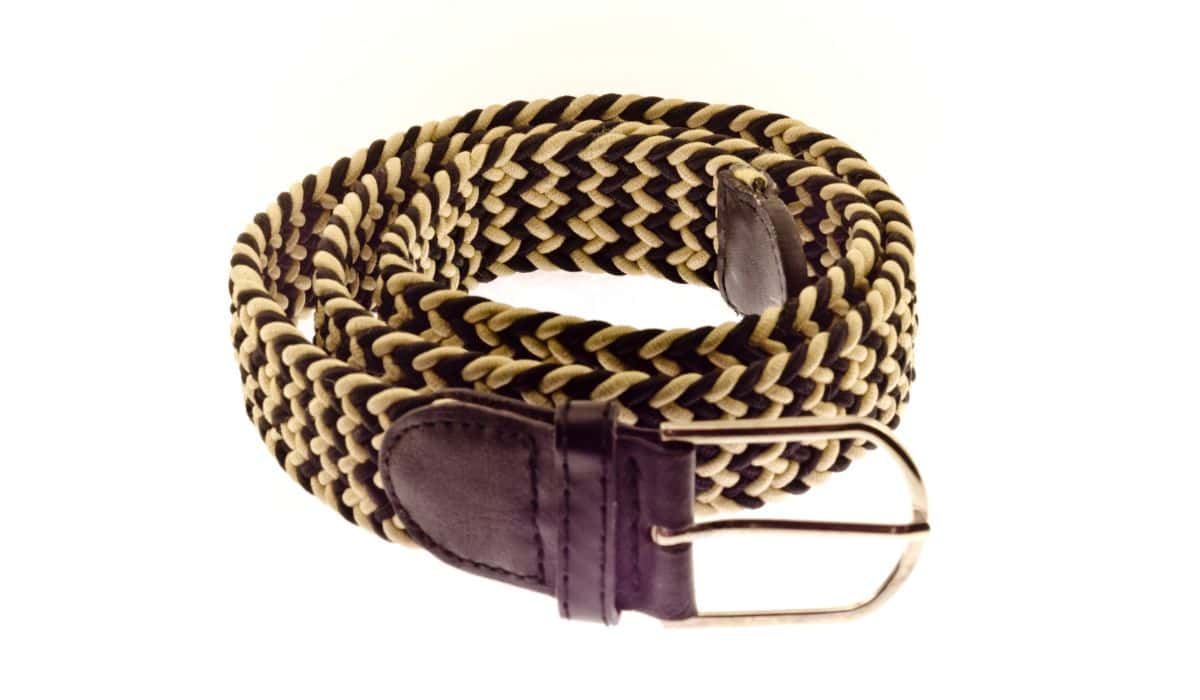
Stretch belts are probably the easiest place to start if pressure around your waist is what bothers you most while playing. The material gives when you rotate, bend over, sit in the cart, or eat something regrettable at the turn. If a traditional belt tends to feel restrictive once you start moving, that extra flexibility can make a pretty noticeable difference.
They are also forgiving when it comes to sizing. With a leather belt, landing between two holes can leave you choosing between slightly too tight and slightly too loose. Stretch material gives you a little more room to work with, so the exact fit is not quite as critical. But sizing still matters. You still want the belt to hold your pants where they belong without relying on the elastic to do all the work. Check the manufacturer’s size chart rather than assuming your pants size automatically translates to the belt.
Width matters here too. A thinner stretch belt tends to disappear around the waist a little more than a thick leather belt, which some golfers will prefer. Make sure it still moves easily through the belt loops on the golf shorts or pants you wear most often and does not bunch the waistband once your shirt is tucked in.
Stretch also has an advantage in wet weather. If I knew I was going to spend several hours playing in steady rain, I would have fewer concerns about repeatedly soaking a synthetic stretch belt than I would with leather.
The tradeoff is what happens with age. I had a stretch belt that I wore for a few years, and eventually the stretch just kept disappearing. There was not one dramatic failure; it simply got looser and looser until the material stopped snapping back the way it used to, and at that point it was not doing much of a job as a belt.
If you are comparing stretch belts, I would pay attention to how robust the material feels and how well it returns to its original shape after being pulled. A little give is the reason you are buying it, but permanent give is not a good sign.
Ratchet Belts
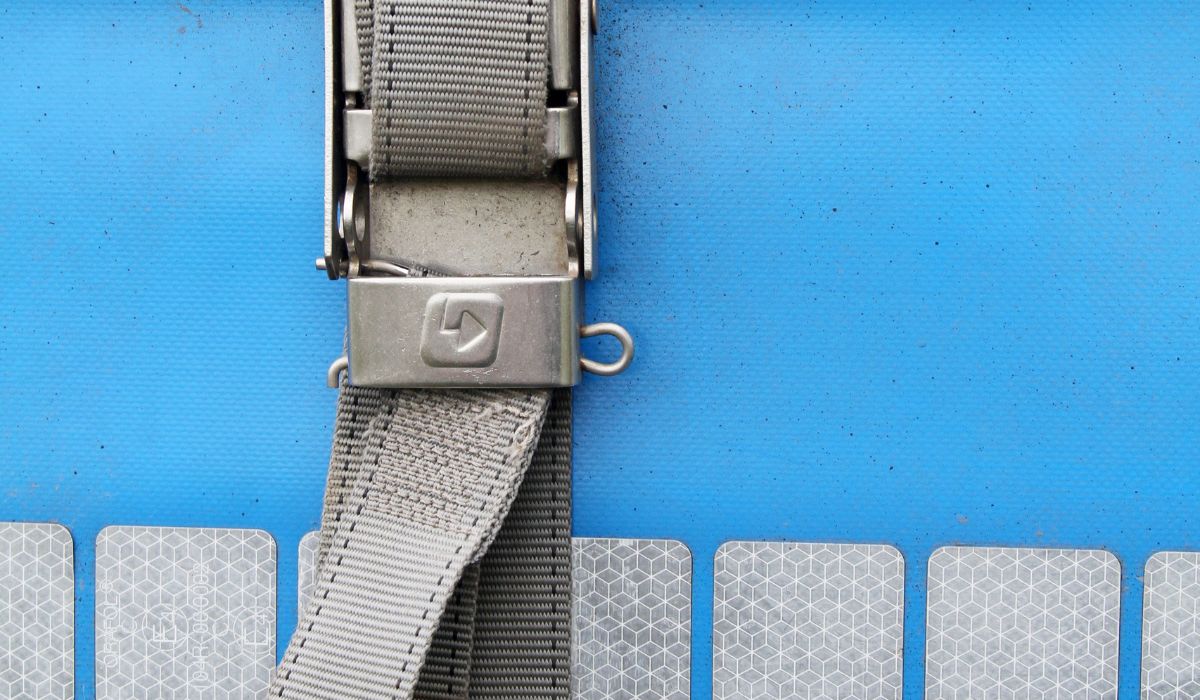
Ratchet belts solve a different problem: instead of traditional holes spaced an inch or so apart, the belt uses a track that lets you make much smaller adjustments. If one hole on a regular belt feels too snug and the next one feels too loose, a ratchet system gives you more room to fine-tune the fit.
These micro-adjustments can also be useful during a long round. You may want the belt a little tighter when you start and slightly looser after lunch or after sitting in a cart for a few hours. With a ratchet belt, you can make that adjustment without jumping an entire belt hole.
Sizing is generally forgiving for the same reason, although you should still follow the manufacturer’s instructions. Some ratchet belts are designed to be trimmed to size, while others come in predetermined lengths. That is worth checking before ordering because the sizing process is not always the same as buying a traditional leather belt.
The buckle is one of the bigger things I would look at before buying. Ratchet belts need a mechanism inside the buckle to engage and release the track, so some buckles are bulkier than a simple frame-and-prong buckle. That may not bother you while standing, but it can become more noticeable when you bend down to pick up a ball, crouch over a putt, or sit in the cart. Try the buckle against the usual golf pants or shorts you wear. Even if the belt itself fits easily through the loops, a bigger buckle can still stick out farther than you expected or sit awkwardly against the waistband.
Durability is a little different with a ratchet belt too. You do not have traditional holes stretching or wearing because there are no holes doing the adjusting. Instead, I would pay attention to the track and buckle mechanism because those are the pieces being engaged every time you tighten or release the belt.
If you constantly find yourself wishing your regular belt had a hole somewhere between two existing holes, this is a good category to look at first.
Traditional Leather Belts

Traditional leather makes the most sense if you are already comfortable wearing a regular belt while golfing and do not feel like you need extra stretch or smaller fit adjustments. The biggest thing is getting the initial fit right. Ideally, you do not want to be relying on the first or last hole every time you wear it. Having some room in either direction gives you flexibility for different pants, a tucked shirt, or simply wearing the belt slightly tighter or looser. Zilker Belts recommends ordering its traditional belts two inches larger than your normal pants waist size, or three inches larger if you wear an odd-numbered pants size.
Width and thickness matter more with leather because the belt can be substantially heavier than a stretch option. A thicker belt may feel great and hold its shape well, but there is a difference between substantial and rigid. You still want enough flexibility that it follows your waist instead of feeling like a board wrapped around you.
The buckle matters here too. A heavier buckle is not automatically uncomfortable, but I would make sure it does not dig in when you rotate, sit down, or bend over.
Leather also changes with use; a good leather belt will generally soften as you wear it. Some creasing around the buckle and wear around your most-used hole are normal. If you are buying one you hope to keep for years, I would look at the holes, stitching, edges, and the fold where the leather wraps around the buckle.
The biggest advantage of a traditional leather belt is that it doesn’t necessarily look like golf equipment. A brown leather belt can move pretty easily from golf shorts into jeans, chinos, or a button-down later. For charity outings, business golf, golf trips, or a round followed by dinner or drinks, that versatility is useful.
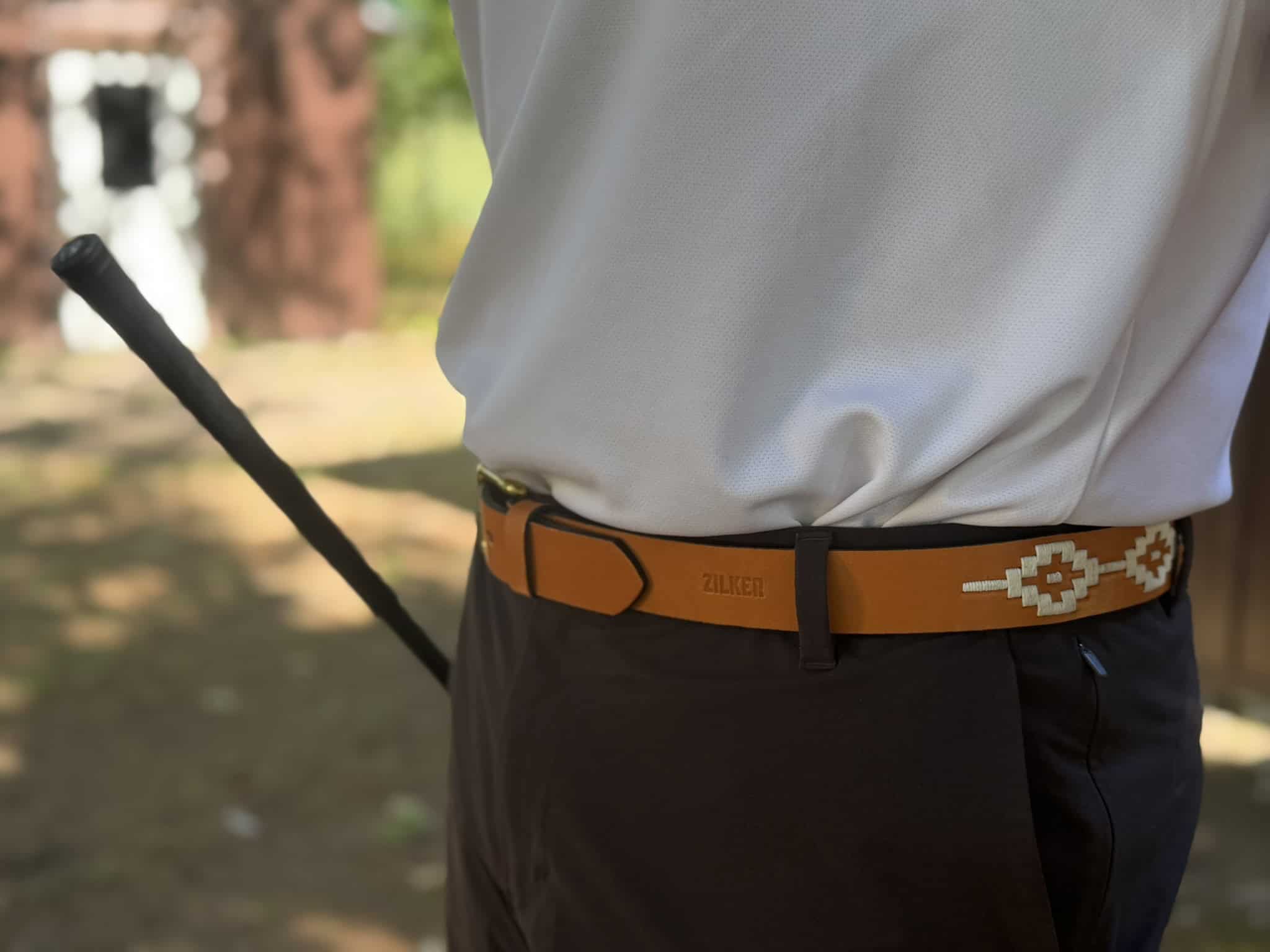
I’ve been wearing Zilker’s Rambler for golfing recently, and I did not have any restriction through my swing. The leather feels thick and fairly heavy-duty when you pick it up, but it does not feel rigid once it is on. The edges did not dig in when I rotated, and the buckle stayed out of the way when I bent over or sat in the cart. Most of the time, I barely noticed the belt was there, which is ironically the most useful thing I can say about it.
That said, the $125 price is obviously more than you need to spend to get a functional golf belt. Stretch, ratchet, and leather options are all available for considerably less. The price is more justified if you like the leather and hand stitching and expect to wear the belt well beyond the golf course. If all you want is something comfortable for a handful of rounds every year, you certainly do not need to spend that much.
What Happens If Leather Gets Wet?
A little rain is not going to keep me off the golf course, so I am also not going to treat a leather belt like it has to stay indoors every time there are a few rain clouds in the forecast. There is a difference between getting caught in a shower and soaking leather for four hours, though.
If a leather belt gets wet, wipe away the surface water and dirt with a soft cloth and let it dry naturally. Lay it flat rather than tossing it into a golf bag while it is still damp, and keep it away from a hair dryer, radiator, or other direct heat source. Forcing wet leather to dry quickly can leave it drier and stiffer afterward.
Once it is completely dry, feel the leather. If it seems noticeably dry or stiff, a small amount of leather conditioner may help restore some softness. Follow the care instructions for the particular belt because finishes and treatments can vary.
If mud or grass gets into decorative stitching, that may also require a little more attention than wiping down plain leather. Zilker, for example, recommends mild dish soap and water for spot-cleaning its nylon stitching, followed by wiping away the soap with a clean, damp cloth and letting the belt dry completely. If I knew the forecast called for an entire round in steady rain, I would probably just grab a synthetic or stretch belt instead.
So, What Is the Best Golf Belt?

Start with whatever bothers you about the belt you already own; if it pinches or feels restrictive when you rotate, stretch is probably the place to start. If you always seem to land between two belt holes, a ratchet system provides a nice solution. However, if neither of those things bothers you, there is no rule saying golf requires a specialized belt at all. A traditional leather belt can work perfectly well if the fit is right, and it has the added advantage of being useful well beyond the golf course.
Whatever style you choose, I would worry less about whether something is marketed as a golf belt and more about how it behaves when you actually move. Put it on with your golf clothes, tuck in your shirt, sit down, bend over, and take a few swings. If you can stop thinking about the belt once the round starts, it is probably doing its job.
