When your child wakes up feeling warm, the last thing you want is to spend several minutes wrestling with a thermometer while they squirm, cry, or insist (demand) they’re perfectly fine. A fast-read digital thermometer can make those moments a little easier. Instead of waiting around for a temperature reading, you can get the information you need quickly and decide what to do next.
But speed isn’t everything. The best digital thermometer for kids should also be accurate when used correctly, appropriate for your child’s age, and easy enough to operate when you’re running on fumes from lack of sleep.

Best Fast-Read Digital Thermometers for Kids at a Glance
| Thermometer | Best For | Read Time | Price (Approx.) |
| Vicks ComfortFlex Digital Thermometer | Best overall | 8 seconds | $22.49 |
| Vicks SpeedRead Digital Thermometer | Best budget-friendly | 8 seconds | $9.89 |
| Frida Baby Quick-Read Rectal Thermometer | Best for newborns | 10 seconds | $14.99 |
| Braun Thermoscan 7 Ear Thermometer | Best for ear use | 1–2 seconds | $68.99 |
| iHealth PT3 No-Touch Forehead Thermometer | Best for no touch | 1 second | $27.99 |
Important note: Reading times are manufacturer claims, not results from our own testing. Actual performance may vary.
Best Overall: Vicks ComfortFlex Digital Thermometer
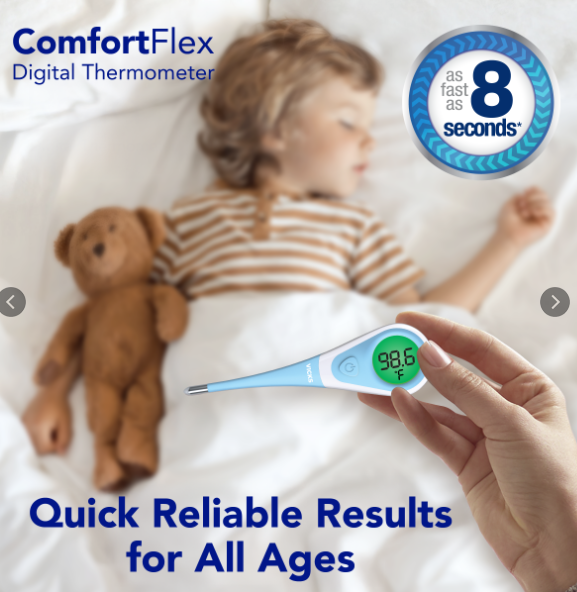
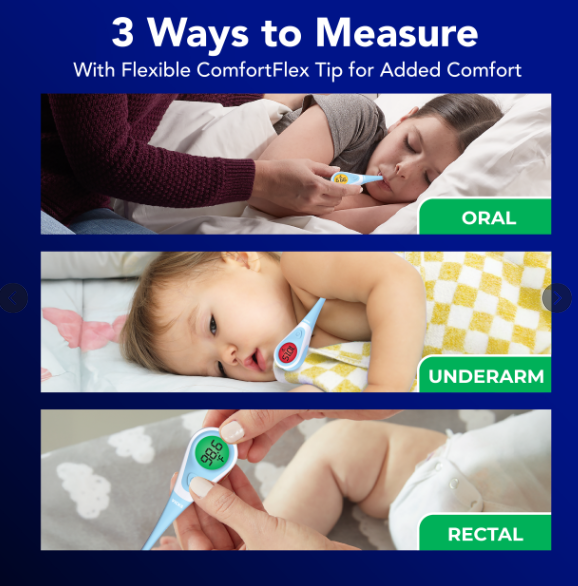
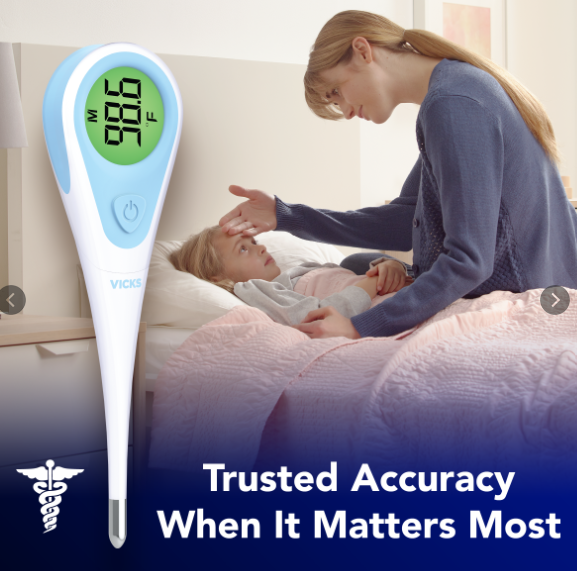
For parents who want a reliable, versatile thermometer without spending a fortune, the Vicks ComfortFlex is a great option. This digital stick thermometer provides readings in a little as eight seconds and can be used orally, rectally, or under the arm. This makes it a practical option for households with children of different ages (perhaps with a separate thermometer for rectal use).
Its main feature is the flexible tip, which may make temperature checks more comfortable than using a rigid-tip thermometer. This is especially helpful when you’re trying to keep an angry, squirmy child still long enough to get a reading. The ComfortFlex also features a large display and Vicks’ Fever InSight technology, which color-codes the readings: green for OK, yellow for mild, and red for high temperatures. It also has a memory function that recalls the last reading, a waterproof design, and an included storage case.
The Vicks ComfortFlex Digital Thermometer is priced at around $22.49.
Best for Budgets: Vicks SpeedRead Digital Thermometer
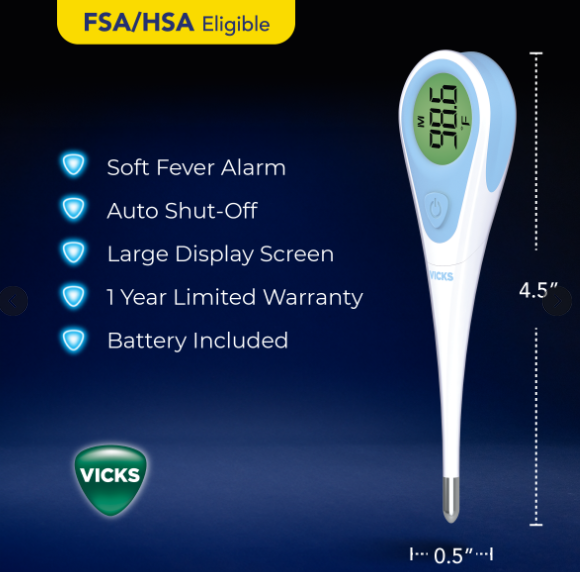
The Vicks SpeedRead offers a lot of the same main features as the ComfortFlex, including readings in as little as eight seconds and the brand’s Fever InSight color-coded display. It can also be used orally, rectally, or under the arm. The thermometer is waterproof for easier cleaning and features an automatic shutoff to help conserve battery life.
Unlike the ComfortFlex, it has a more straightforward design. It doesn’t come with the flexible-tip feature, but if you don’t need that comfort or convenience, the SpeedRead is a cheaper option. It’s a great choice if you’re trying to replace an old thermometer or simply need an inexpensive backup to keep in a diaper bag or travel kit.
The Vicks SpeedRead Digital Thermometer is the cheapest option in this lineup, priced at around $9.89.
Best for Newborns: Frida Baby Quick-Read Rectal Thermometer
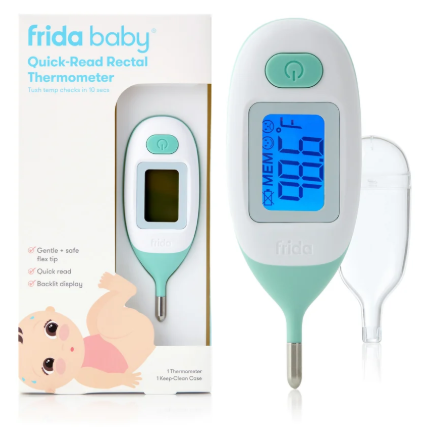
Taking a newborn’s temperature can feel pretty intimidating, especially for first-time parents. The Frida Baby Quick-Read Rectal Thermometer is designed to make the process simple. Unlike multipurpose digital stick thermometers, this one is designed specifically for rectal measurements. This is important to know because the American Academy of Pediatrics considers taking rectal temperature measurements the most accurate method for young infants, especially those younger than three months.
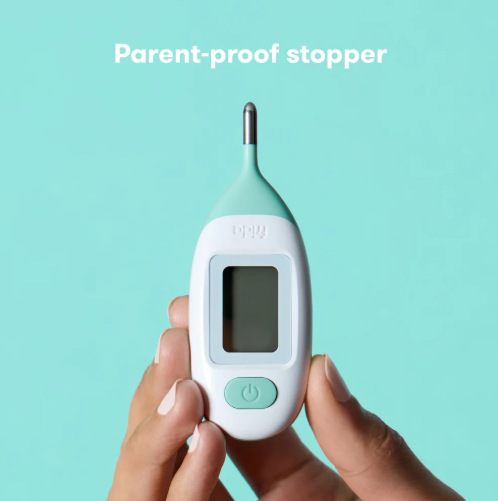
According to Frida Baby, the thermometer provides readings in around 10 seconds and features a flexible tip with a built-in stopper designed to help prevent over-insertion, which is truly a fantastic feature, especially for nervous parents. It also includes a large backlit display, memory for up to 10 previous readings, and a water-resistant design for cleaning.
However, if you’re a parent, you know how long 10 seconds can feel, particularly when you’re doing something that might discomfort an already fussy baby, so the reading time feels a bit long compared to the eight-second time of other options. Additionally, because it’s a rectal-specific thermometer, you will have to eventually get another one as your child grows.
The Friday Baby Quick-Read Rectal Thermometer is priced at around $14.99.
Best for Ear Use: Braun ThermoScan 7 Ear Thermometer
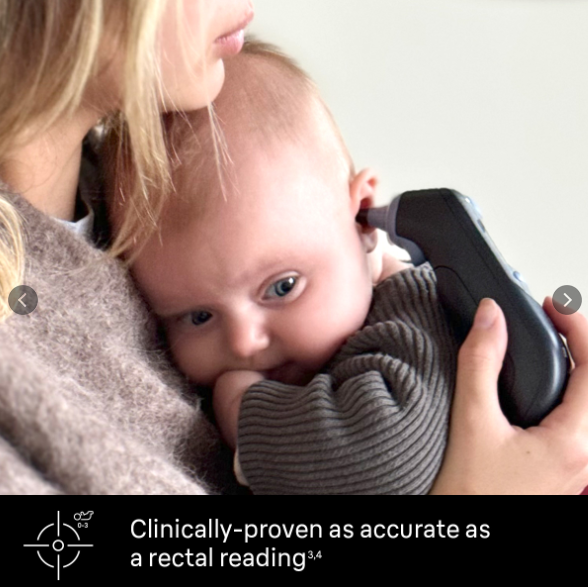
For parents who want quick readings without using a traditional digital stick thermometer, the Braun ThermoScan 7 offers a convenient alternative. This infrared thermometer measures temperature inside the ear and delivers those readings in seconds—like, literally one or two seconds.
One of its standout features is its Age Precision technology, which allows parents to select an age group and receive color-coded temperature guidance based on that selection. You can set ages like 0–3 months, 3–36 months, or 36+ months, and the display will accurately interpret whether a temperature is normal or elevated.
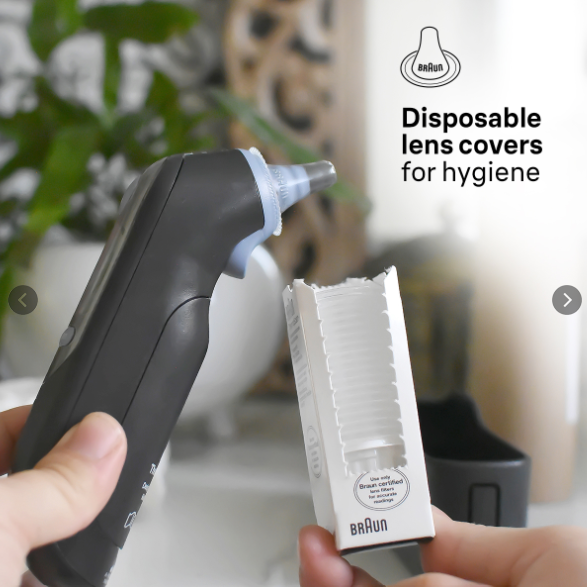
It also features Braun’s ExacTemp positioning system, which uses a light and beep to indicate proper placement, and a pre-warmed tip designed to reduce the cooling effect that can occur when a room-temperature probe enters the ear. The ThermoScan 7 stores the last 10 temperature readings and uses disposable lens filters for hygienic measurements, which is great for families with multiple children of different ages.
However, ear thermometers aren’t recommended for babies younger than six months because their ear canals are too narrow for reliable measurements, so that’s something to consider.
The Braun ThermoScan 7 Ear Thermometer is more expensive than a basic digital stick thermometer at around $68.99, and the disposable lens filters create an additional ongoing expense.
Best for No-Touch Use: iHealth PT3 No-Touch Forehead Thermometer
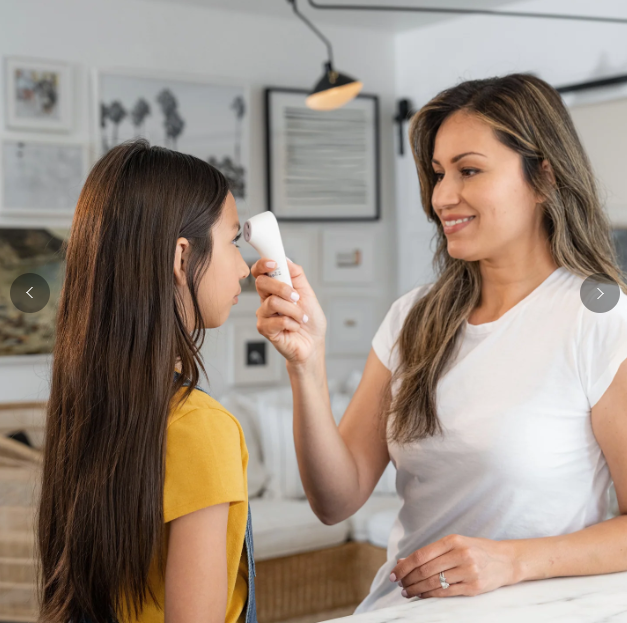
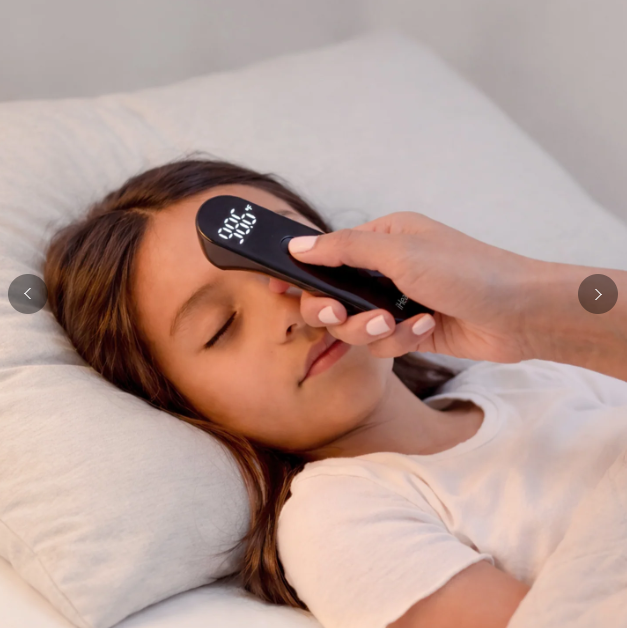
If you’ve ever tried taking a sleeping toddler’s temperature without waking them up, you can probably appreciate the appeal of a no-touch thermometer. The iHealth PT3 measures temperature using infrared sensors without requiring direct contact with the skin. According to iHealth, it delivers readings in approximately one second, making it the fastest option on this list.
Instead of an audible beep (every tired parent’s nightmare), the thermometer vibrates gently when a reading is complete. It also features a large LED display that’s easy to read in low lighting. The device uses multiple sensors to help account for factors such as measurement distance and ambient temperature.
Something I would consider is that the accuracy of the test is really dependent on a lot of factors, like the distance from the forehead, sweat, environmental temperature, and even recent outdoor exposure. So, it might be useful, but I would want a second opinion with multiple readings or a different thermometer.
The iHealth PT3 No-Touch Forehead Thermometer is priced at around $27.99.
How to Choose the Best Thermometer for Your Kids
With so many options available, choosing a thermometer can feel surprisingly complicated. Here are some things to consider to help narrow down the options.
Consider your child’s age.
This is one of the most important factors when choosing a thermometer. For newborns and young infants, a rectal thermometer would generally be considered the most accurate. As children get older, you can look into additional options. Forehead thermometers can be used across age groups, while ear thermometers are generally recommended beginning at six months.
Once children are around four years old and can reliably keep a thermometer under their tongue, oral measurements become another option to consider. Most importantly, if you’re shopping for a newborn, accuracy and an age-appropriate measurement method should take priority over convenience.
Look beyond the advertised read time.
Fast readings can make temperature checks easier, especially with young children. However, a thermometer that advertises a one-second reading isn’t automatically better than one that takes eight or 10 seconds. Different thermometer types measure temperature in different ways, and factors such as positioning, environmental conditions, and proper technique all affect the reliability of a reading.
Instead of choosing based on speed alone, look for a thermometer that combines a reasonably quick measurement with a method appropriate for your child’s age.
Prioritize ease of use.
This is where you should think about how your child responds to having their temperature taken. A flexible-tip digital thermometer may be perfectly suitable for a cooperative child, but if you have a toddler who refuses to sit still, a no-touch model might be more practical.
Features such as large displays, backlighting, memory recall, and even vibrations instead of beeps can make a difference when you’re tired or managing a sick child.
Which Thermometer Is Best for Your Child’s Age?
The American Academy of Pediatrics provides guidance on which temperature-taking methods are appropriate at different ages.
| Age | Recommended Measurement Methods |
| Birth–3 months | Rectal for the most accurate reading; forehead or underarm may be used for initial screening |
| 3–6 months | Rectal or forehead; underarm for screening |
| 6 months–3 years | Rectal, forehead, or ear; underarm for screening |
| 4 years and older | Oral, forehead, or ear; other methods when appropriate |
How to Take Your Child’s Temperature Accurately
Start by reading the instructions included with your specific device, considering measurement techniques vary by thermometer types.
- For oral measurements: Wait after your child has eaten or consumed hot or cold drinks, and make sure they can keep their mouth closed around the thermometer until the reading is complete.
- For underarm measurements: Place the thermometer directly against the skin and hold your child’s arm snugly against their body.
- For a rectal temperature: Use the appropriate lubricant, follow the manufacturer’s insertion instructions, and never force the thermometer or leave your child unattended.
- For ear thermometers: Proper positioning is essential. Follow the instructions for your child’s age, and make sure the probe is correctly aligned.
- For forehead thermometers: Check that the forehead is clean and dry and that the thermometer is positioned at the recommended distance.
It’s also helpful to record the temperature, the time it was taken, and the measurement method, particularly if you’re monitoring a fever over several hours.
When Should You Call the Pediatrician About a Fever?
A fever is generally defined as a temperature of 100.4ºF (38ºC) or higher, although interpretation can vary depending on the measurement method and your child’s age. For babies younger than three months, rectal temperatures of 100.4ºF or higher require immediate contact with a healthcare professional, even if your baby otherwise seems well.
For older children, the temperature itself is only one part of the picture. Contact your pediatrician if your child appears unusually ill, is having difficulty staying hydrated, has a persistent fever, or develops concerning symptoms. Seek emergency medical care for symptoms such as difficult breathing, difficulty waking, or a seizure, particularly if it is a first seizure.
Remember that a thermometer measures temperature, but it can’t tell you what’s causing a fever. When in doubt, your child’s healthcare provider can help you determine the appropriate next steps.
Choosing the Best Fast-Read Digital Thermometer for Kids
The best fast-read digital thermometer for kids isn’t necessarily the most expensive or the one with the shortest advertised reading time. It’s the one that works with your child’s age, provides reliable measurements when used correctly, and makes temperature checks manageable for your family.
Whichever model you choose, familiarize yourself with its instructions before your child gets sick. Having a thermometer you know how to use can make an already stressful moment a little easier.